Norway is characterised by strong local collaborative platforms and a market where SMEs and accountants frequently work within the same tools. It's also one of the most digitally advanced countries in Europe on e-invoicing: roughly half of all annual B2B and B2G invoices are already exchanged electronically via Peppol. That infrastructure maturity is now pushing an accelerated B2B mandate. For a SaaS vendor or fintech, Norway is a concentrated, cloud-first market dominated by home-grown platforms.
This guide pulls the Norway findings from our State of European Accounting Tech 2026 study, based on a survey of 1,400 SMEs and accountants across Europe, including 66 respondents in Norway.
Norway at a glance
- 600K SMEs
- 13 accounting tools named by Norwegian respondents
- B2B e-invoicing mandate: issuance from January 2027
- 66 survey respondents
Roughly half of all annual B2B and B2G invoices in Norway are already exchanged electronically via Peppol, which informed the government's decision to accelerate the B2B mandate.
Norway's accelerated e-invoicing timeline
Norway has been at the forefront of B2G e-invoicing since 2012. For B2B transactions, the government accelerated its mandate in March 2026: mandatory issuance of structured e-invoices for all businesses with bookkeeping obligations takes effect from 1 January 2027, one year ahead of the originally proposed 2028 date. By 1 January 2030, businesses must also be able to receive e-invoices and operate fully digital bookkeeping systems.
Why the accounting profession is tightly regulated
Norway's accounting profession is strictly regulated. All accountants offering services to third parties must hold a state authorisation (statsautorisert regnskapsfører) issued by Finanstilsynet, the Financial Supervisory Authority.
The profession covers the full scope of financial administration for SME clients: bookkeeping, VAT reporting, annual accounts, tax filings and payroll. The dominant model for software usage is collaborative: SMEs and accountants work within the same platforms, primarily Tripletex, PowerOffice or Fiken.
A concentrated set of local leaders
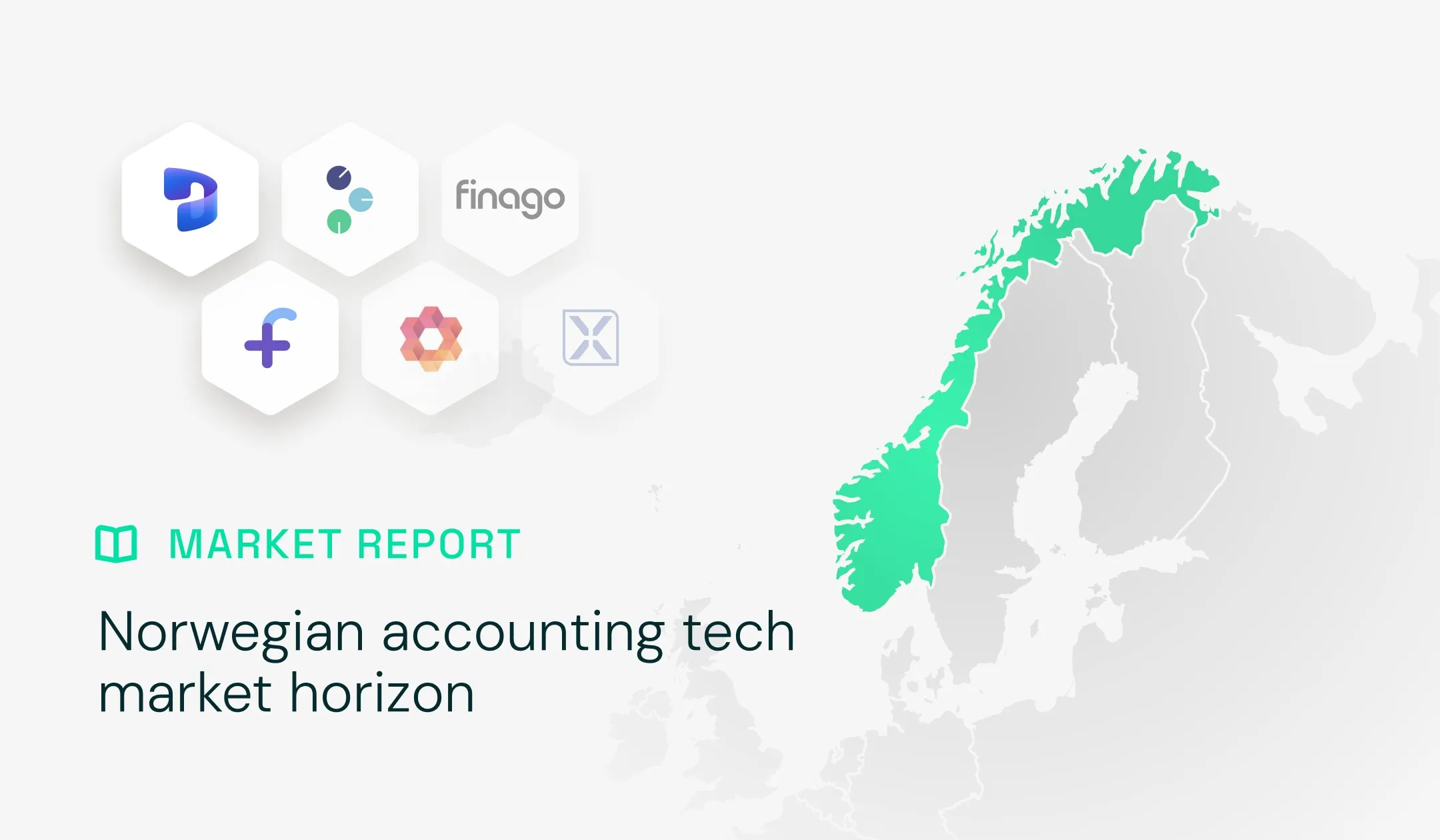
Norway has a concentrated set of local leaders with limited ERP fragmentation at the top.
- Tripletex, Fiken and PowerOffice are the core SME and collaborative platforms, serving both direct users and accountant-facing workflows.
- Microsoft Business Central covers larger SMEs and acts as an ERP layer frequently paired with one of the local platforms.
- Xledger and Zirius serve the mid-market more like a traditional ERP.
- Unimicro and Finago (formerly 24SevenOffice) are accountant-facing tools used primarily by accounting firms.
The market is almost entirely cloud-based across the top tier, consistent with Norway's long history of digital infrastructure adoption.
What this means for software vendors
Tripletex, Fiken, PowerOffice, Xledger and 24SevenOffice are consistently described in Norwegian market sources as the core local cluster, and our survey confirms that set. The key nuance is that most of these tools serve as shared SME-accountant platforms rather than pure accountant-firm suites. So accountant influence in Norway shows up through platform standardisation rather than through a separate layer of production tools, as in France or Belgium.
For a vendor, that's good news for coverage: connecting to the local collaborative platforms (Tripletex, Fiken, PowerOffice) reaches both SMEs and their accountants at once, with the ERP layer covering larger companies. The challenge is keeping those integrations current as the accelerated e-invoicing rules reshape the platforms through 2027 and beyond.
This is exactly what Chift is built to solve. One integration gives you access to a growing library of Norwegian and European accounting connectors, with authentication, mapping and API maintenance handled for you.
Get the full picture
Norway is one of ten countries we analysed in depth. The full State of European Accounting Tech 2026 report covers Belgium, France, Spain, Germany, the Netherlands, the UK, Italy, Denmark and Sweden, plus the trends reshaping SME software, how businesses choose their tools, and why integration has become the defining battleground for accounting platforms.
Download the full white paper to get the complete market landscape, all the data, and the country-by-country breakdown.
Want to see how Chift can connect your product to Europe's accounting software? Book a demo with our team.
.webp)