Spain is an SME-heavy economy where the asesoría model, small advisory and accounting practices, remains central to how most businesses manage their finances. Around 80% of Spanish SMEs outsource bookkeeping and tax filing to an asesoría, and many never touch the accounting software directly. Two big regulatory reforms are now landing on top of that. For a SaaS vendor or fintech, Spain is a market where the advisor, not the business owner, holds the keys.
This guide pulls the Spain findings from our State of European Accounting Tech 2026 study, based on a survey of 1,400 SMEs and accountants across Europe, including 200 respondents in Spain.
Spain at a glance
- 2.9M SMEs
- 20 accounting tools named by Spanish respondents
- B2B e-invoicing mandate: phased from 2027
- 200 survey respondents
"80% of SMEs in Spain outsource their bookkeeping and tax filing to an asesoría. From that eighty percent, I'd say eighty percent of them don't get any software, they just hire them as a service provider. The actual end client, the SME owner, never actually sees anything that happens in that software."— David Alonso, Co-founder, Finco AI
What two reforms mean for Spain's software market
Spain is undergoing two parallel regulatory shifts that will significantly reshape the software market:
- Veri*Factu mandates the use of certified invoicing software capable of generating verifiable, tamper-proof invoice records. It takes effect in 2027.
- The Crea y Crece law introduces mandatory B2B e-invoicing. Initially planned for 2025 but delayed, large companies are now expected to comply from late 2027, with all other businesses following through 2028.
Together, these reforms are creating strong pressure on accounting and invoicing software vendors to upgrade their compliance infrastructure.
The central role of the asesoría
Spain's accounting ecosystem is structured around despachos / asesorías, advisory and accounting practices that remain central to compliance, payroll and statutory accounts, especially for micro and small companies. A commonly cited indicator of scale: roughly 150,000 to 160,000 despachos, with around 80% employing fewer than ten people.
"Entrepreneurs and business owners still see their tax accountant, payroll advisor as their psychologist, their one-stop-shop, the person they trust to take care of all their admin work."— David Alonso, Co-founder, Zinco AI
Many SMEs keep an advisor for statutory and tax compliance even when they internalise parts of finance operations, which makes advisor tooling and collaboration workflows structurally important.
A two-track market
Spain is best understood as a two-track market:
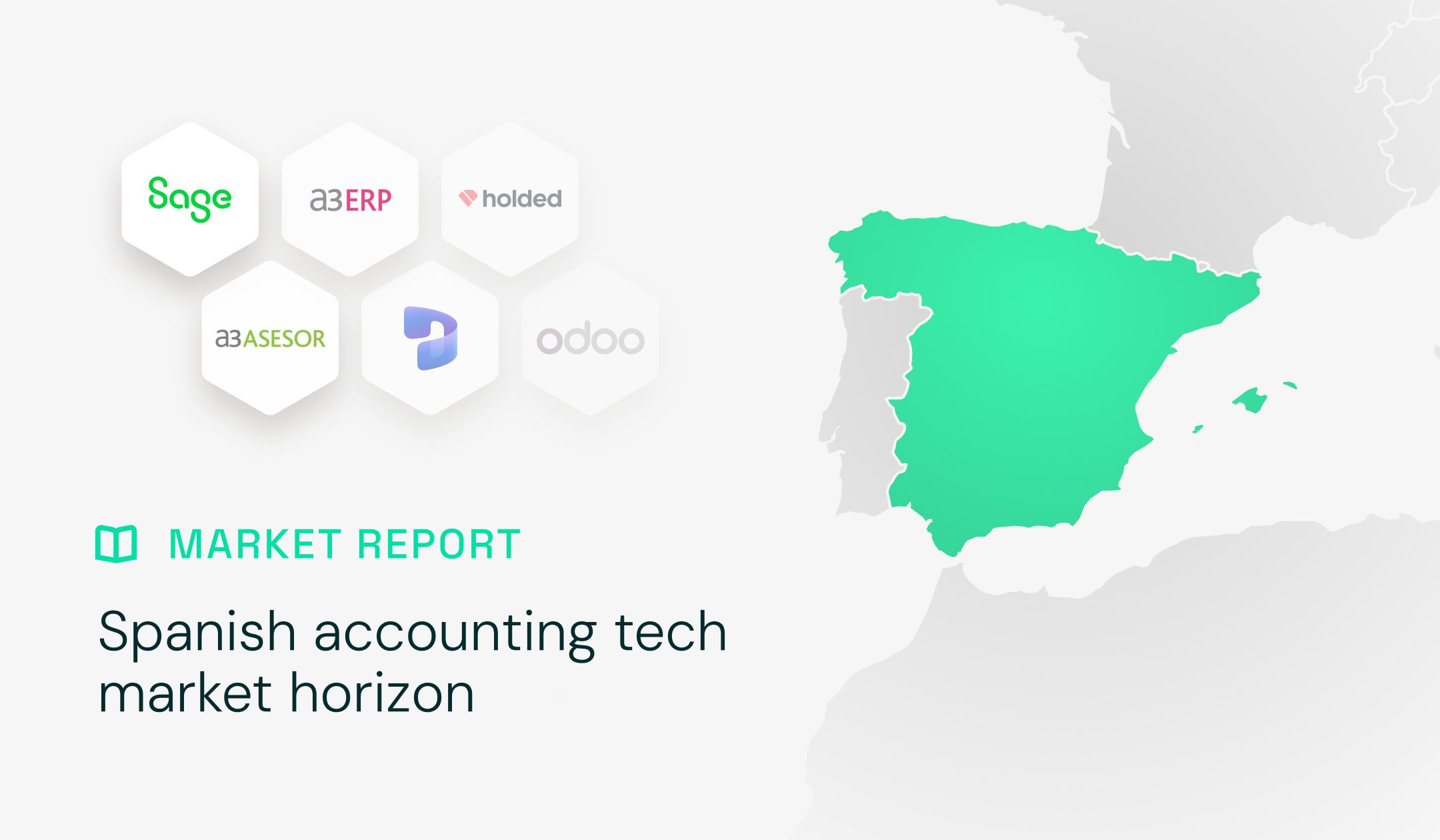
- Advisor-grade stacks (despachos) dominate the majority of the market, especially for micro and small companies. Most traditional SMEs fully outsource accounting and rarely interact with the software directly. Here the market is dominated by Wolters Kluwer's A3ERP suite and the broader Sage ecosystem, the core systems of record for accounting firms.
- Lightweight tools such as Holded can be used directly by more tech-savvy entrepreneurs, though these remain secondary to accountant-managed workflows.
- As companies scale, they progressively internalise finance and adopt more robust systems such as Odoo, Microsoft Business Central or NetSuite, reflecting a shift toward greater autonomy and direct software usage.
What this means for software vendors
The dual structure has a direct impact on how to read the market. Our survey mixes accountant production systems and SME-facing tools, and respondents can select multiple tools, so the data reflects tool visibility rather than actual systems of record.
"The Spanish accounting software market is highly concentrated, with Sage and A3ERP accounting for the vast majority of usage among accounting firms, leaving limited room for direct disruption."— David Alonso, Co-founder, Zinco AI
In particular, A3 solutions used by despachos are likely under-represented (especially A3ERP), since many SMEs aren't aware of the tools their accounting firms use. For a vendor, the practical takeaway is that real coverage of Spain runs through the advisor stack first, A3ERP and the Sage ecosystem, then the direct-use tools like Holded and the ERP layer for scaling companies.
Connecting to all of that, while keeping pace with Veri*Factu and Crea y Crece, is a heavy lift in-house. This is exactly what Chift is built to solve. One integration gives you access to a growing library of Spanish and European accounting connectors, with authentication, mapping and API maintenance handled for you.
Get the full picture
Spain is one of ten countries we analysed in depth. The full State of European Accounting Tech 2026 report covers Belgium, France, Germany, the Netherlands, the UK, Italy, Denmark, Sweden and Norway, plus the trends reshaping SME software, how businesses choose their tools, and why integration has become the defining battleground for accounting platforms.
Download the full white paper to get the complete market landscape, all the data, and the country-by-country breakdown.
Want to see how Chift can connect your product to Europe's accounting software? Book a demo with our team.
.webp)