Cashflow management software
Connect accounting, banking and financial tools to your cashflow platform. Automate data flows and deliver real-time financial visibility.
.webp)
.webp)

.webp)

.webp)

Powering growth for cashflow management platforms
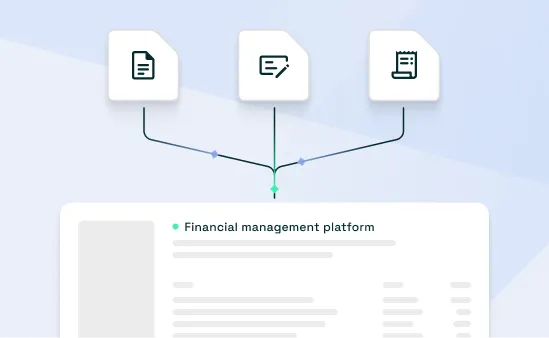
Unified financial data
Aggregate accounting, banking and payment data automatically to give businesses a single, reliable view of their financial position.
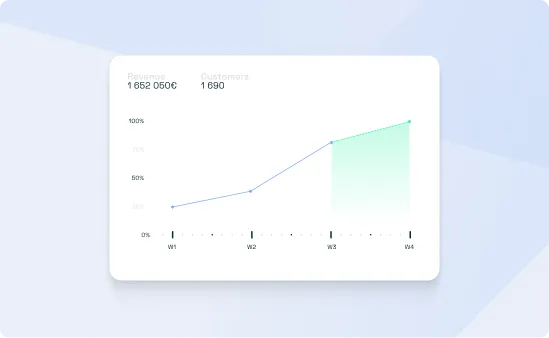
Accurate forecasting
Use structured financial data from connected systems to power more reliable cashflow forecasts and financial insights.

Real-time cash visibility
Deliver real-time financial insights by automatically syncing accounting, banking and operational data into your cashflow platform.
More use cases
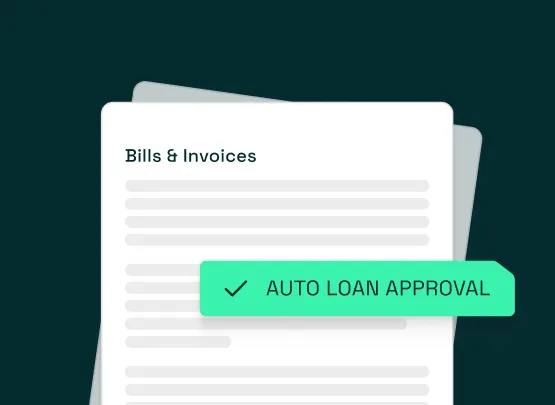
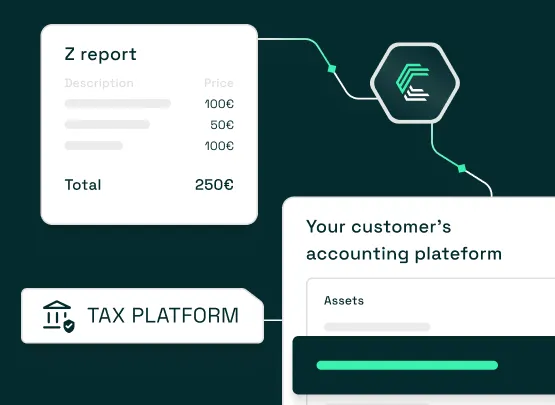
Take Your Integrations to the Next Level
Unified doc
Our comprehensive documentation empowers developers to seamlessly integrate with our APIs, providing all the guidance they need in one place.

Embedded Integration
Track integrations in real-time with a usage dashboard, detailed transaction logs, automated alerts, and robust security to ensure everything runs smoothly
Embedded integrations
Choose the integration experience that works best for your product between embedded integrations or white-labelled marketplace.


We have access with a single integration, to a whole portfolio of integrations that we would have had to build ourselves if we did not work with Chift.

Frequently asked questions
What are accounting integrations?
Accounting integrations are connections between accounting software and other business tools, such as POS systems, payment platforms, expense management systems or eCommerce solutions, that allow financial data to sync automatically between systems.
For accounting software vendors, integrations eliminate manual data entry and ensure that financial information stays consistent across tools. This improves data accuracy, reduces reconciliation work, and enables real-time financial visibility for end users.
Should accounting software vendors build or buy integrations?
For most accounting software vendors, building integrations in-house quickly becomes a bottleneck as they scale.
Each integration requires:
- Initial development
- Continuous maintenance as APIs change
- Ongoing monitoring and support
As the number of integrations grows, this creates significant engineering overhead and slows down product development. Buying an integration solution, such as Chift’s unified API, allows vendors to launch multiple integrations faster while offloading maintenance.
This enables teams to focus on core product innovation instead of managing dozens of third-party connections.
How do integrations improve accounting software user experience?
Integrations improve the user experience by removing friction from financial workflows and reducing manual work.
Instead of exporting and importing data between tools, users can rely on:
- Automatic data synchronization
- Real-time updates across systems
- Fewer errors and discrepancies
For accounting software vendors, this results in a more seamless product experience, higher user satisfaction, and increased product stickiness. Integrations also make the software more valuable by embedding it into a broader ecosystem of tools.
What’s the fastest way to build accounting integrations?
The fastest way to build accounting integrations is to use a unified API that provides pre-built connections to multiple third-party tools.
Instead of developing each integration individually, accounting software vendors can:
- Integrate once with a single API
- Access multiple accounting and business system connections
- Launch integrations in a fraction of the time
This approach significantly reduces time-to-market and engineering effort, while ensuring scalability as new integrations are added. It’s the most efficient way for vendors to expand their integration ecosystem without slowing down their roadmap.
How can accounting software vendors leverage AI with integrations?
Accounting software vendors can leverage AI effectively only if their data is unified, structured, and accessible across systems. Without integrations, financial data remains siloed, limiting the performance and reliability of AI features.
Chift enables AI-ready products by providing an integration layer that standardizes and centralizes data from multiple sources. Through its MCP (Model Context Protocol), Chift allows AI systems to access consistent, real-time financial data across integrations. This means vendors can:
- Build AI features on top of clean, normalized data
- Enable smarter automation (e.g. reconciliation, categorization, anomaly detection)
- Deliver more accurate insights and predictions
By combining a unified API with an AI-ready integration layer, Chift helps accounting software vendors move faster from raw data to meaningful AI-powered features.
Take the fast lane to intelligent connectivity
One connection is all it takes to access
150+ financial tools.