Your team spent months building the core product. The last thing you need is for integrations to take the next year of your roadmap. Integration platforms promise to fix that, but they were not all built for the same job, and most were built for a different one than yours.
Here is the pattern to watch for. Some platforms go horizontal: many categories, many connectors, shallow depth in each. Others go focused: deep in one vertical. This guide compares the leading platforms on that axis, plus architecture, coverage, and how AI-ready they are, so you can pick the one that fits your use case, your stack, and your market.
What is a Unified API?
A unified API is one API that speaks for many. Instead of integrating separately with Pennylane, Odoo, Exact Online and a dozen others, each with its own data model, authentication and quirks, you integrate once with a provider that normalises all of them behind a single interface and absorbs the changes when a source API shifts.
The practical difference: connecting to twenty accounting tools stops being twenty projects with twenty maintenance backlogs, and becomes one project plus a list of connectors you switch on.
The trade-off is real too. A unified data model is only as good as its depth, and a shallow one will not carry a product whose value depends on the details. That is why the platform you pick matters more than the concept.
Read more about what is a unified API.
How to evaluate an integration platform
Five questions separate a clean launch from a migration project a year later:
- Architecture. Does it fetch live from the source (real-time, always fresh), keep a synced copy (fast, queryable, good for analytics), or let you choose per connection? Most platforms give you one. The best give you both.
- Real depth in the right categories. A catalogue of 400 connectors means little if the ten your customers actually use are shallow or missing. What matters is whether the platform is deep in the categories your product touches: accounting, POS, payments, invoicing, and so on.
- On-premise reach. A large share of European SMB accounting still runs on software installed on a machine, not in a browser. If a platform only speaks to cloud APIs, those customers are out of scope for your product.
- AI-readiness. If your product has AI features, can an agent read and write customers' financial data safely, without inventing numbers or crossing tenant boundaries?
- Fit for your buyer and market. A platform built for banks and lenders, or for the US and UK, behaves differently from one built for SaaS product integrations, or for European software. Match the platform's centre of gravity to yours.
1. Chift
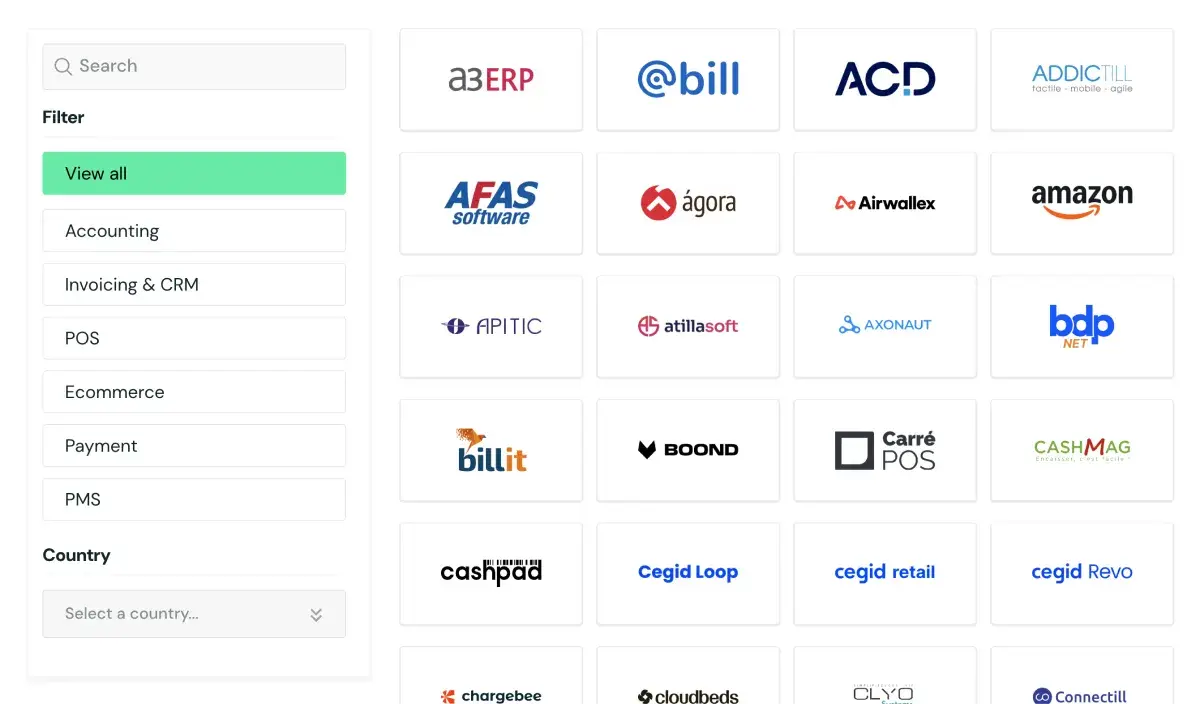
Chift is the integration platform that brings business software together. One integration gives you a growing library of connectors across accounting, invoicing, POS, e-commerce, payments, and PMS, activated in one click. Chift handles authentication, data mapping, rate limits, and maintenance, so your engineers integrate once. That focus is the point: instead of spreading thin across HR, CRM, and ticketing, Chift goes deep in the financial and operational categories a SaaS or fintech actually needs.
Pros
- Real-time and async. By default the unified API does a live round-trip to the source for the freshest data. Any connection can switch to an opt-in datalayer, a synced copy built for heavy analytical and paginated queries, with the integration code unchanged. Most platforms force one model. Chift lets you choose per connection.
- AI agents that stay inside the lines. Chift's MCP server exposes a governed semantic layer, so a model picks from curated measures rather than writing raw SQL. It cannot invent fields, cross tenant boundaries, or mix two currencies in one total.
- On-premise software, connected like cloud software. Sage 100 FR, Sage 200 ES and their peers run on a server in the office, not behind an API. Chift reaches them with local agents, installed through Cockpit, a Windows app that guides the setup, validates the machine's components and credentials before anything goes live, and updates itself.
- European coverage by design. Pennylane, Exact Online, DATEV, Odoo, WinBooks, Lightspeed, Mollie and a hundred more, with servers hosted in Europe and GDPR compliance built in.
- Depth where it counts. Six financial and operational categories covered properly, plus an embeddable white-label marketplace and support that speaks both engineering and commercial.
Best for: B2B SaaS companies and fintechs that need connectivity across accounting, POS, payments, invoicing, e-commerce, or PMS, want the choice of real-time or synced data, and want a platform powered by AI features.
“Thanks to Chift’s unified API, we delivered 4 finished integrations in less than 4 to 6 weeks. That’s about 10x faster.” Ashleigh Auld, Strategic Partner Marketing Manager, Pleo
2. Merge
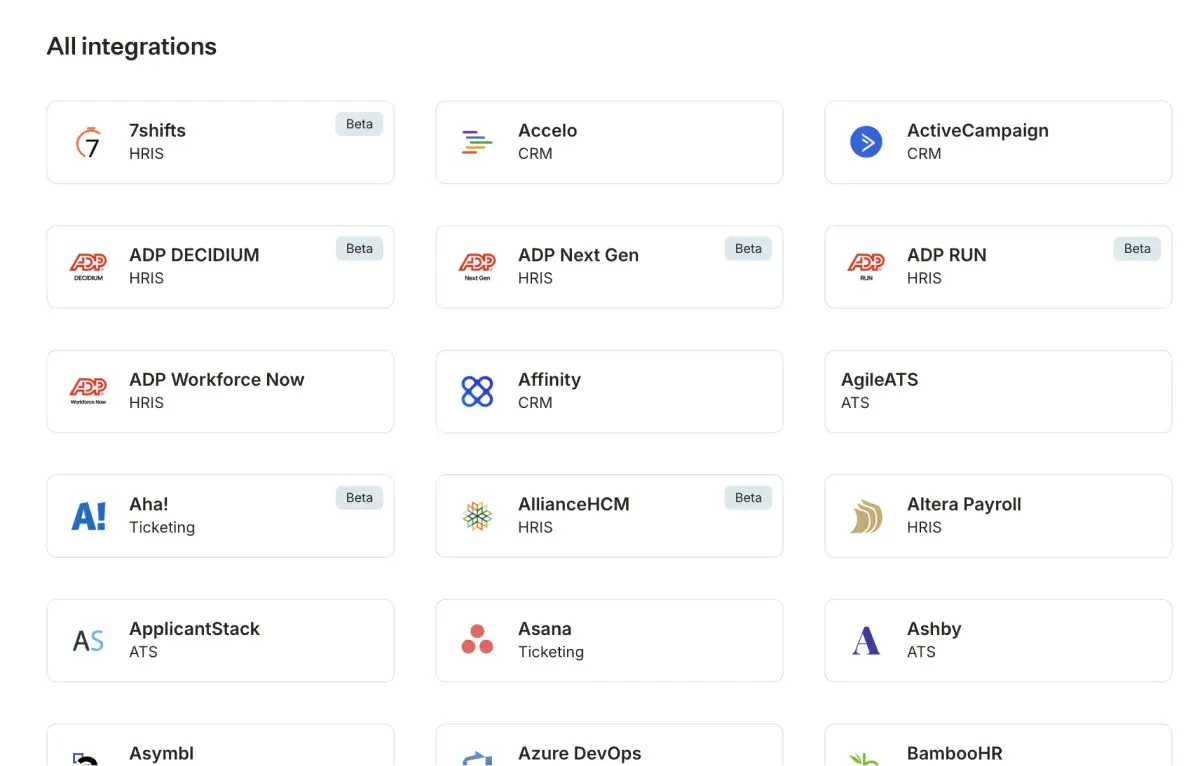
Merge is a widely adopted unified API for B2B SaaS. As of 2026 it spans eight categories, HRIS, ATS, CRM, accounting, ticketing, file storage, knowledge base, and chat, with 220+ integrations behind a single contract. Its deepest investment is HRIS, with strong coverage of BambooHR, Workday, and ADP. Its architecture is sync-based: Merge keeps a synced copy of the data and serves reads from its own store. The developer experience is a strong point: clean SDKs, request logs, sync dashboards, and structured error tracking. On the AI side, Merge's Agent Handler exposes its connectors to AI agents via REST and MCP.
Pros
- Deep investment in HRIS, with strong coverage of BambooHR, Workday, and ADP.
- 220+ integrations across eight categories under a single contract.
- Excellent developer experience: clean SDKs, request logs, sync dashboards, and structured error tracking.
- AI-ready through Agent Handler, which exposes its connectors to agents via REST and MCP.
Cons
- POS, invoicing, PMS and payments are not covered at all.
- The accounting category lists roughly a dozen platforms, concentrated on QuickBooks Online, Xero and NetSuite, and all of them cloud. There is no on-premise or desktop connector, and Merge runs as managed cloud only.
- Universal data models are fixed, so custom fields or objects outside the common schema hit limits quickly.
- Coverage skews US and UK, and several enterprise controls sit behind higher tiers.
Where it fits your ICP: Merge is a horizontal platform whose centre of gravity is HR and people data. For a product built on financial data, the gaps show fast.
Best for: SaaS teams that need HRIS, ATS, CRM, and basic accounting from one vendor, primarily for US and UK markets.
3. Apideck
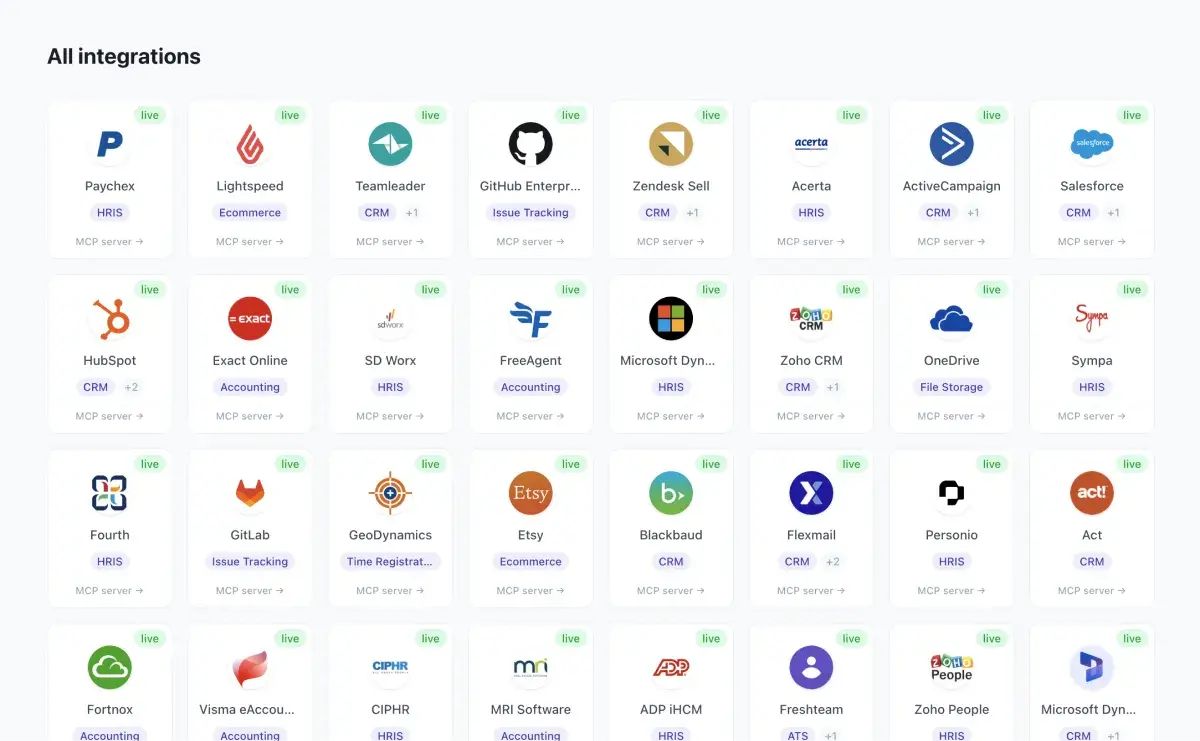
Apideck is a unified API covering accounting, CRM, HRIS, e-commerce, file storage, and ATS, with around 190 connectors. Rather than caching, it fetches directly from source APIs, so data is always live.
Pros
- Real-time architecture: no cache, always live data from the source.
- 40+ accounting connectors, the widest accounting catalogue among the horizontal platforms.
- Transparent per-consumer pricing and an embeddable integrations marketplace.
- Traction in Benelux alongside its US and UK base.
- An MCP server that gives agents scoped, permissioned access, with read/write controls and field-level redaction.
Cons
- Real-time only. There is no synced store for heavy analytical or paginated workloads, so you inherit the source system's speed and availability on every read.
- The category set stops short of POS, PMS, invoicing and payments.
- On-premise is limited to QuickBooks Desktop, and that runs through Intuit's own Web Connector. European desktop software such as Sage 100 or Sage 200 is not covered.
- Primarily self-serve, with no native no-code sync product for non-technical teams.
Where it fits your ICP: Apideck is built horizontally, breadth across many categories with limited depth inside each.
Best for: SaaS teams that want real-time data and a polished developer experience across accounting, CRM, and HRIS, mainly in US and Benelux markets.
4. Plaid
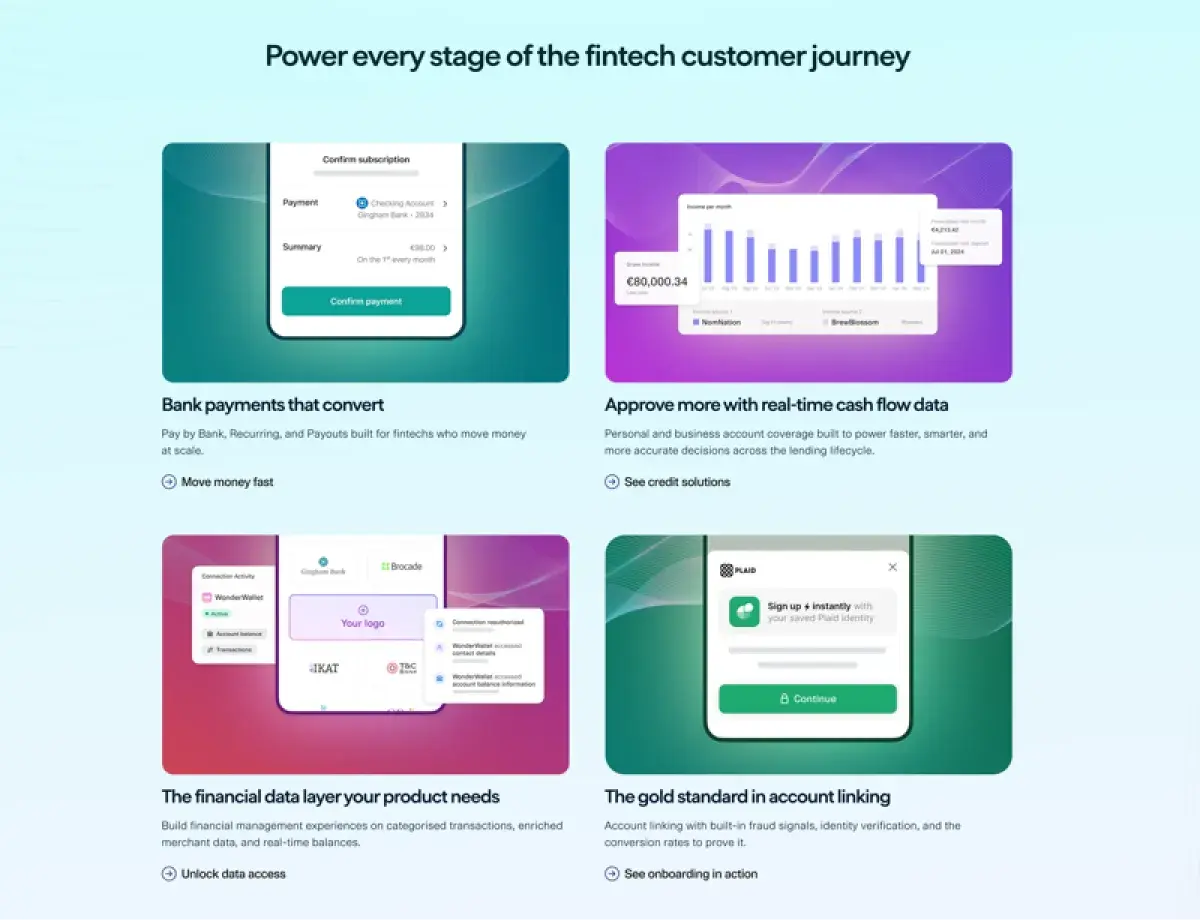
Plaid is the reference for bank connectivity. It connects apps to consumers' and businesses' bank accounts for payments, balance checks, income verification, and transaction history, and reports connectivity to roughly 12,000 financial institutions across North America and Europe. Plaid also offers an official MCP server, though it is aimed at dashboard diagnostics and monitoring rather than exposing customer banking data to agents.
Pros
- Connectivity to roughly 12,000 financial institutions across North America and Europe.
- The most complete option for payments, balance checks, income verification and transaction history.
- An official MCP server, aimed at dashboard diagnostics and monitoring.
Cons
- It connects to banks, not to accounting tools, POS systems, or invoicing software. On-premise business software is out of scope by design.
- The MCP server is built for monitoring, not for exposing customer banking data to agents.
- European depth varies significantly by country compared with its US footprint.
Where it fits your ICP: Plaid is a bank connectivity platform, not a business software integration platform. The two are complementary, not interchangeable: many fintechs use Plaid for open banking and a platform like Chift for the accounting and operational data.
Best for: Products that need bank account connectivity, payment initiation, or income verification. Not a substitute for business software integrations.
5. Codat
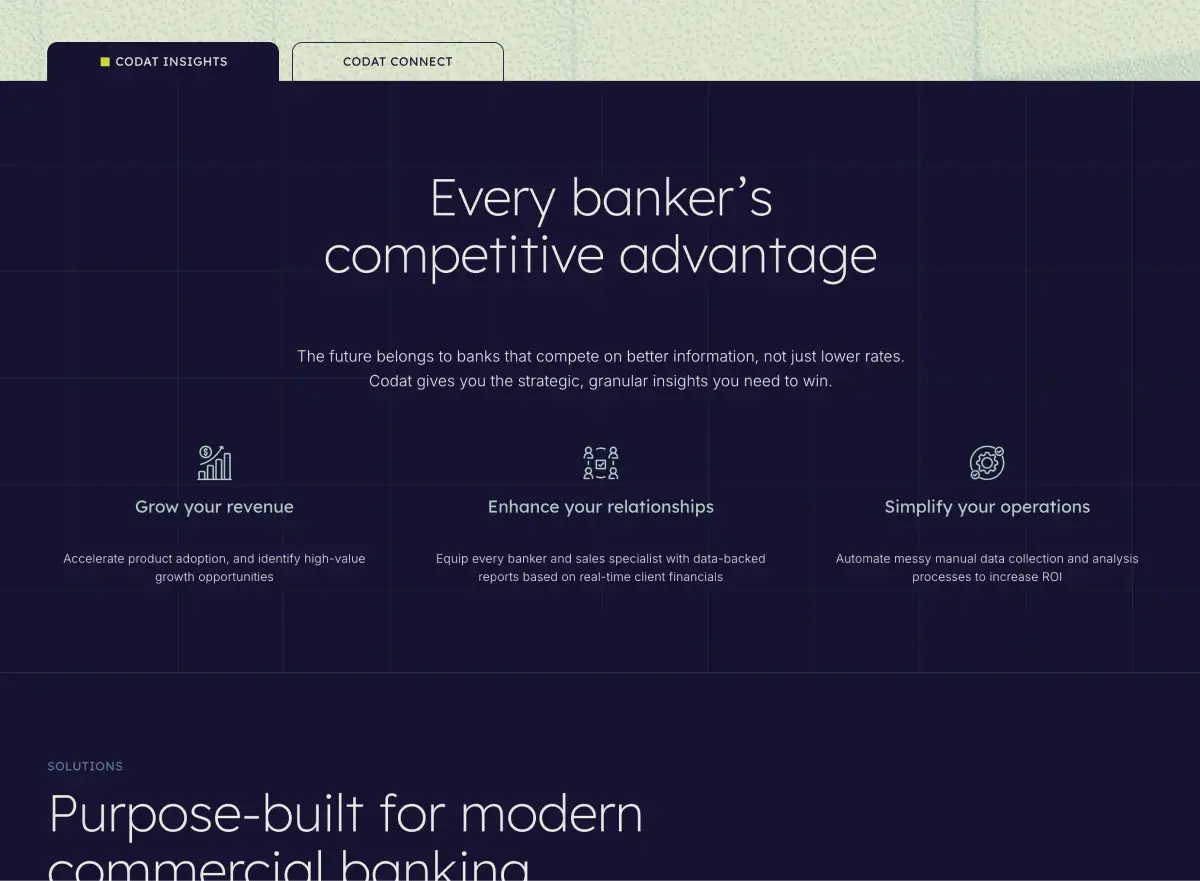
Codat connects banks, lenders, and fintechs to their small-business customers' financial systems. It integrates with around 30 accounting, ERP, banking, and commerce platforms and packages that into lending, bank feeds, and spend-analytics products.
Pros
- Purpose-built products for lending, bank feeds and spend analytics, not just raw connectivity.
- The one other platform here with a real on-premise story: white-labelled Windows connectors for QuickBooks Desktop and Sage 50 (UK & Ireland).
- UK data residency, with mature enterprise-grade logging and monitoring.
Cons
- The product surface (lending, bank feeds, spend) does not map cleanly to a SaaS vendor shipping product integrations to its own customers.
- The sync-and-cache model means a copy of your customers' financial data sits in Codat's infrastructure.
- No first-party MCP server as of mid-2026.
- On-premise coverage targets UK and US desktop software rather than continental European systems.
- Footprint is primarily UK and US, and pricing is fully custom, which slows early evaluation.
Where it fits your ICP: Codat is purpose-built for banks and lenders underwriting SMB credit, not for B2B SaaS vendors shipping product integrations to their own customers.
Best for: Banks, fintechs, and lenders in the UK and US extracting structured financial data from SMBs for underwriting, card programmes, or analytics.
6. Kombo
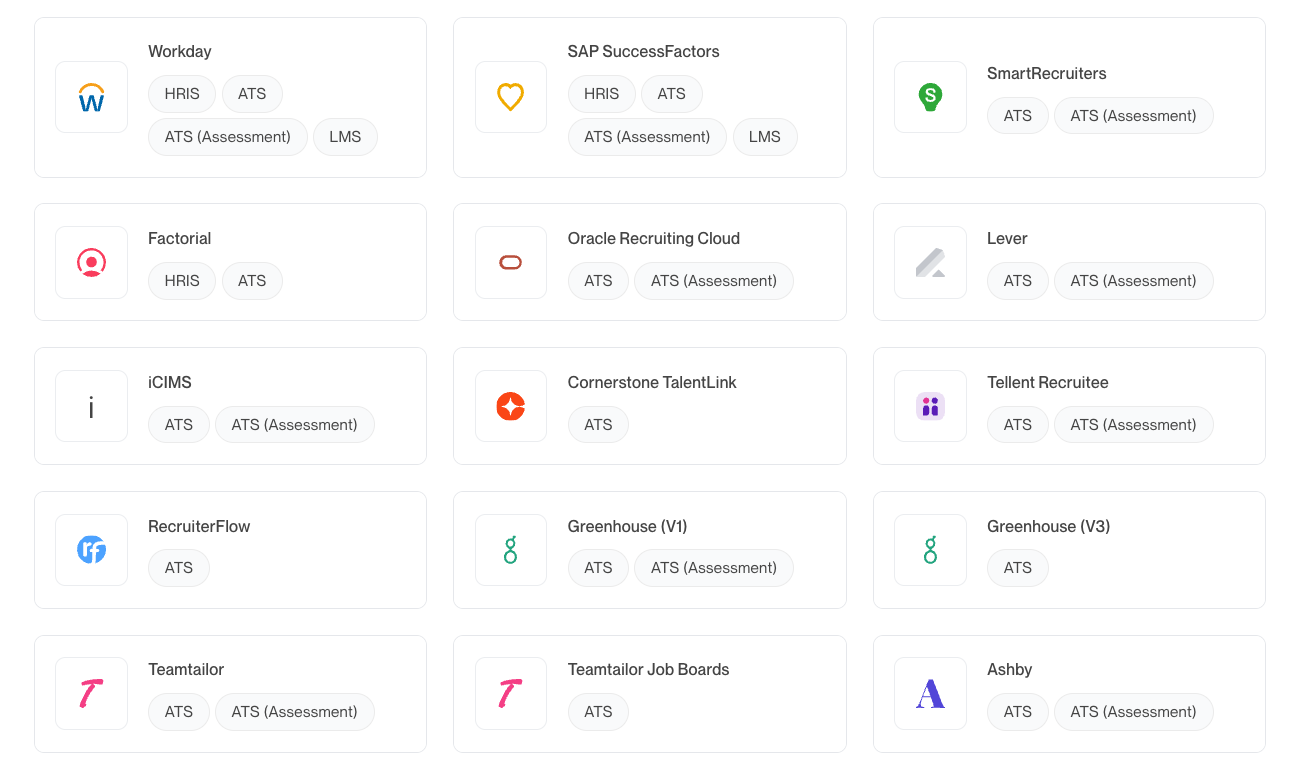
Kombo is a European unified API founded in 2022, focused on HRIS, ATS, and payroll. It runs on a sync-and-store architecture.
Pros
- 100+ integrations across HRIS, ATS and payroll.
- Strong coverage of European HR tools such as Personio, Factorial, HiBob, and Teamtailor that US-first platforms often miss.
- GDPR-first approach and well-regarded support.
Cons
- HR only, and cloud HR tools at that: no on-premise connectors, no local agents.
- Any product that also needs accounting, POS, e-commerce, payments, invoicing, or PMS will need a second integration platform alongside it.
- No first-party MCP server as of mid-2026, so AI agents connect through standard REST APIs.
- Observability and error detection are lighter than on more mature platforms.
Where it fits your ICP: Kombo is deliberately narrow, and good at what it does. But it covers HR only.
Best for: HR tech companies that need deep, reliable coverage of European HRIS, ATS, and payroll.
7. Unified.to
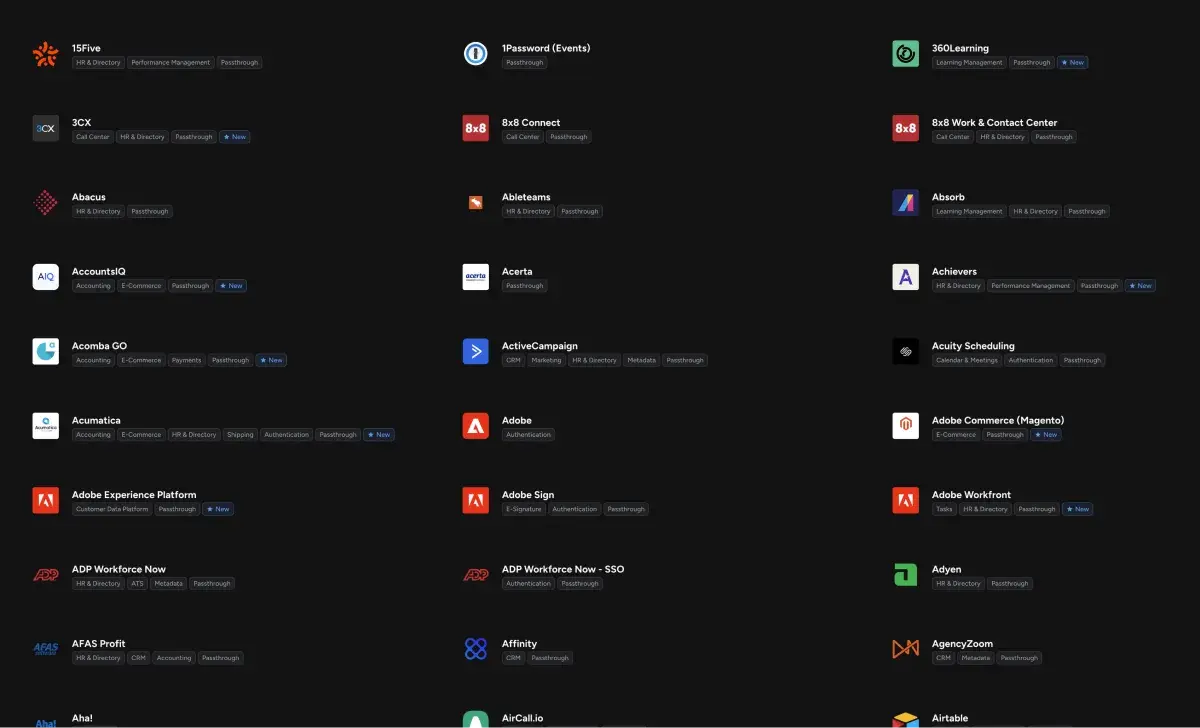
Unified.to is a broad unified API covering 460+ integrations across 28 categories, one of the widest catalogues available.
Pros
- 460+ integrations across 28 categories, one of the widest catalogues on the market.
- Real-time pass-through with no customer data stored at rest, which reduces compliance scope.
- A first-party MCP server, so all its integrations are reachable by AI agents.
- Usage-based pricing with a free trial.
Cons
- Coverage inside any one category, including accounting, is variable, and products with complex or non-standard data models can hit gaps.
- The pass-through model connects to cloud APIs only, with no on-premise agent, so desktop accounting software is out of reach.
- Enterprise-grade logging and monitoring are more limited than on Merge or Codat.
- Depth in financial and operational software is lighter than tools built specifically for it.
Where it fits your ICP: Breadth is the priority, not depth.
Best for: SaaS teams and agent builders that need broad, real-time connectivity across many categories with a data-minimisation architecture.
Pick the platform that matches your use case
The market has no shortage of options, but most solve a specific problem for a specific market:
- Merge and Kombo are strong for HR tech.
- Plaid is the reference for bank connectivity.
- Apideck suits developer-first, real-time-only SaaS.
- Codat is built for banks and lenders, and is the other serious option for UK and US desktop accounting software.
- Unified.to fits teams that need very broad, real-time connectivity across many categories.
The trade-off underneath all of them is the same: horizontal platforms give you breadth but shallow depth in any one vertical, and focused platforms give you depth in a vertical that may not be yours.
If your product runs on financial and operational data, the accounting tools, POS systems, payment platforms, invoicing software and property management systems your customers actually use, you want a platform built for exactly that: deep in those categories, with the choice of real-time or synced data, an AI layer that agents can query safely, and a way to reach the software that still runs on a server in the back office. If those customers are in Europe, the fit is sharper still. That is what Chift focuses on: financial connectivity for the AI era.
Book a demo to see how Chift can help you integrate.
.jpg)


.jpg)
.jpg)
.jpg)
.jpg)
.jpg)
.jpg)
.jpg)
.webp)
.webp)
.webp)




.webp)



.avif)


