Building SaaS in Europe sounds simple, until you touch accounting. On paper, it’s one market. But in reality, it’s a maze of local systems, tax rules, and completely different APIs. One integration rarely works everywhere.
If your product creates invoices, tracks expenses, or syncs payments, accounting is core infrastructure. And the opportunity is big. Europe has millions of SMEs and rapid growth in cloud accounting adoption, with regulations like mandatory e-invoicing accelerating digital workflows. That means customers now expect their tools to “just connect.”
In this guide, we’ll walk you through 12 accounting APIs that truly matter in 2026, what each does best, how their integrations differ, and where they fit, so you can build smarter and scale across Europe without reinventing the wheel every time.
DATEV
DATEV is the backbone of German accounting. Most businesses use it, which makes it mandatory for any fintech entering DACH markets. Unlike modern SaaS tools, DATEV still relies heavily on structured CSV/XML batch jobs alongside newer REST endpoints. Integrations feel closer to file orchestration than typical APIs, but coverage unlocks thousands of firms overnight.
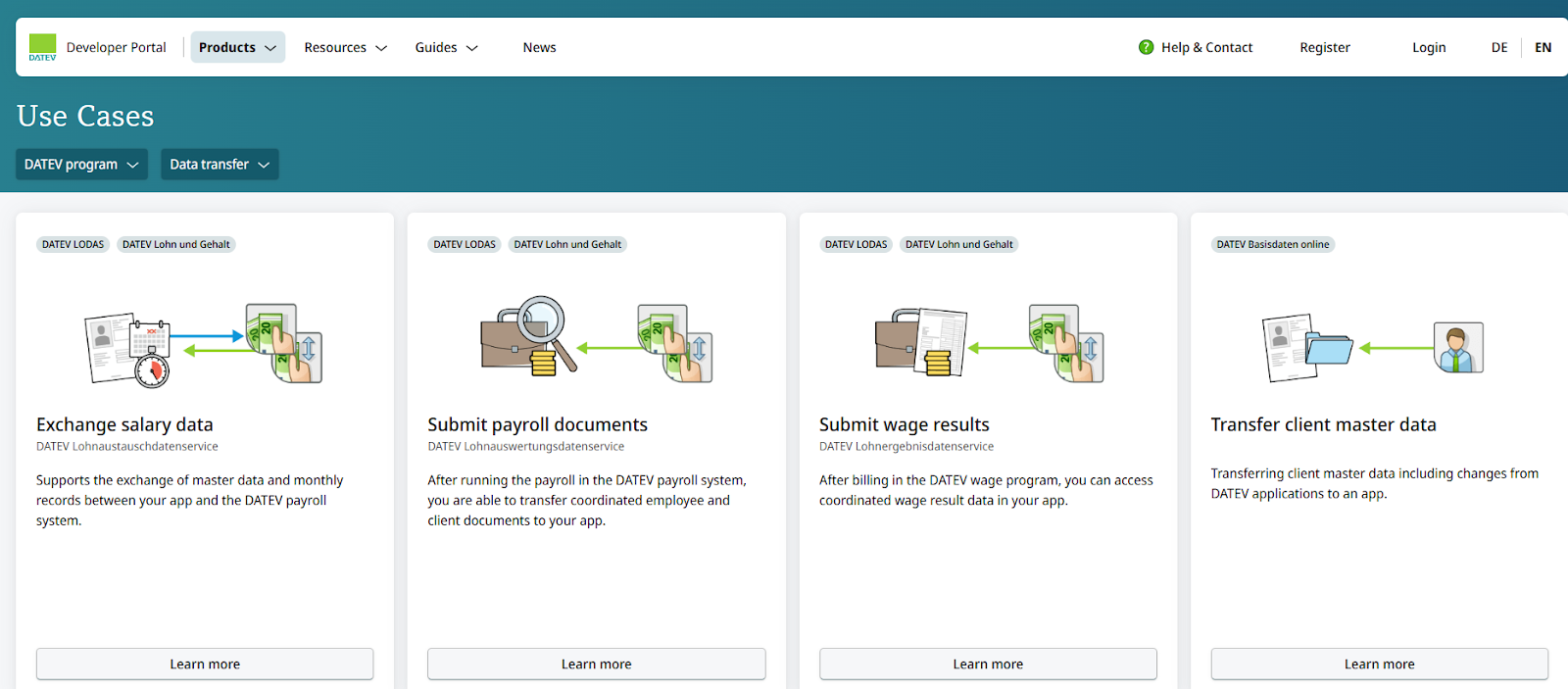
Documentation: https://developer.datev.de
Key features
- Authentication: Folder-level permissions and mandate-based access controls
- Architecture: CSV/XML batch jobs plus limited REST services
- Data access: Journals, invoices, VAT, ledgers, documents
- Sync style: Upload files, trigger jobs, poll processing status
- Compliance: Strict German GAAP and GoBD audit requirements
- Performance: Batch-first, not optimized for real-time sync
Best suited for: German SME and CPA tools
Related: How to succeed with your DATEV API integration
Pennylane
Pennylane is an API-first accounting and finance platform for freelancers and small businesses in France. It unifies invoicing, expenses, banking, and bookkeeping in one real-time system. Instead of batch uploads or spreadsheets, its REST APIs enable continuous sync, letting developers automate invoices, ledger entries, and reports programmatically, more like embedded finance than traditional accounting software.
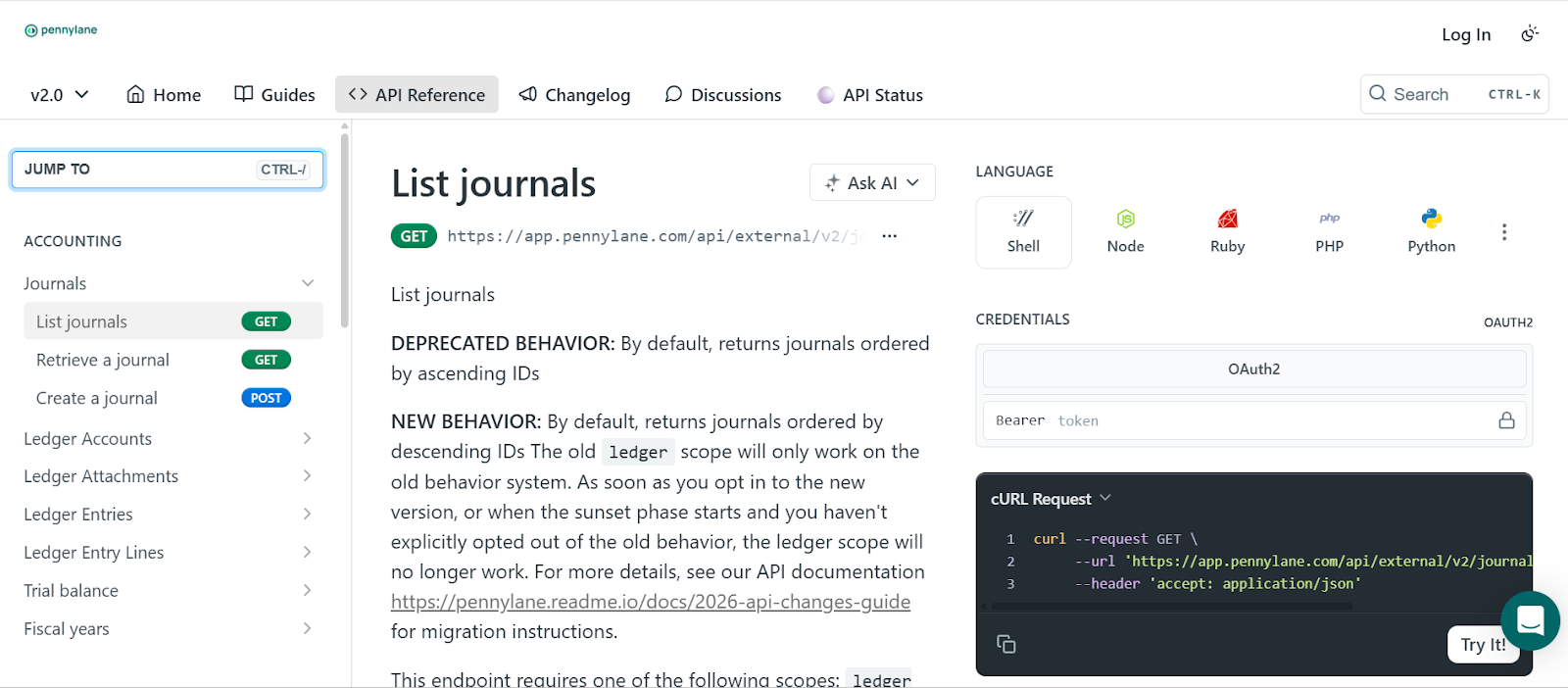
Documentation: https://pennylane.readme.io/
Key features
- Authentication: OAuth 2.0 or scoped API tokens (company/firm level)
- Architecture: RESTful APIs with sandbox environment
- Data access: Invoices, customers, suppliers, ledger entries, transactions, reports
- Sync style: Real-time operations with incremental updates (no CSV uploads)
- Compliance: French GAAP support, FEC export, e-invoicing readiness
- Performance: Designed for continuous reconciliation
Best suited for: Freelancers, startups, and small businesses
Related: How to succeed with your Pennylane API integration project
Exact Online
Exact Online dominates Dutch and Belgian SMEs. Its API is REST-based with OAuth and division-level scoping. Many ecommerce, inventory, and ERP add-ons depend on it. Because Benelux businesses frequently operate multi-entity setups, Exact often becomes the primary accounting source of truth.
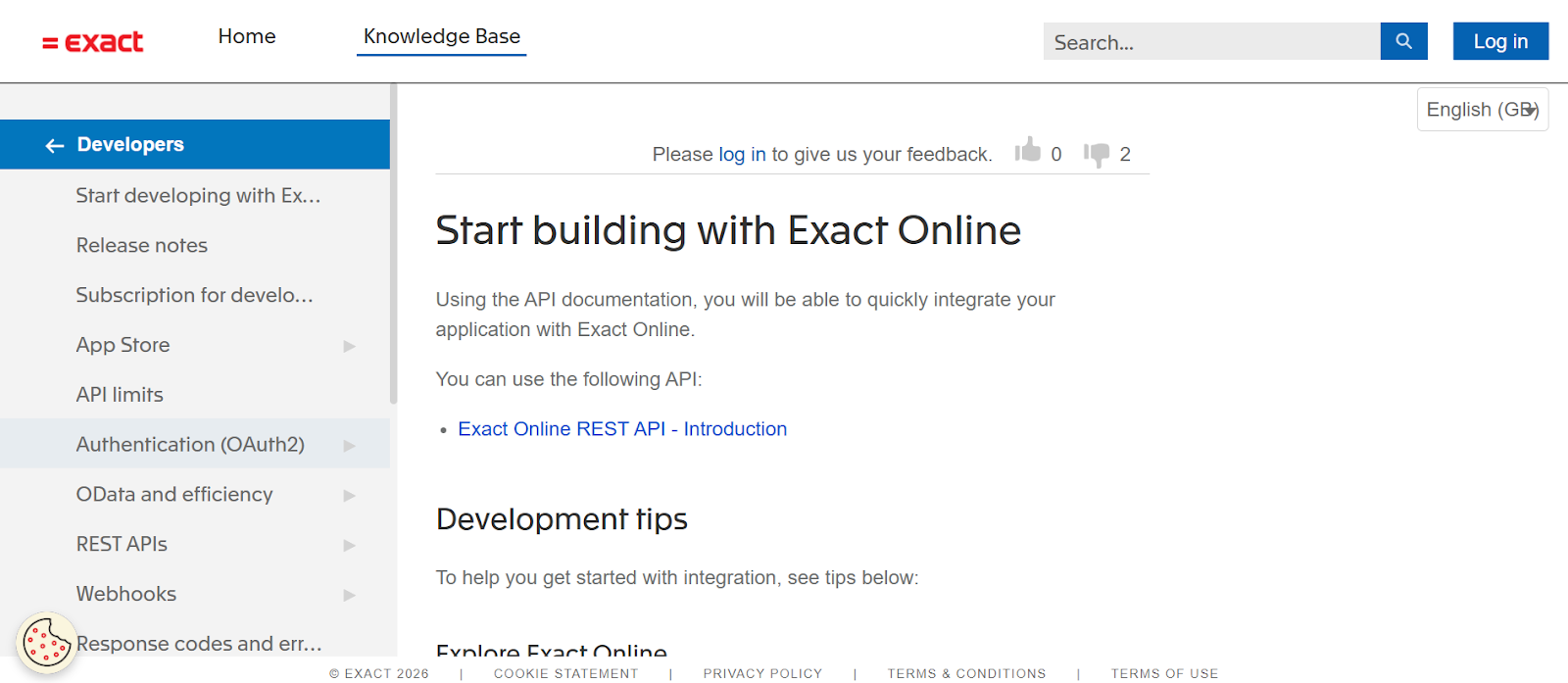
Documentation: https://developers.exactonline.com
Key features
- Authentication: OAuth-based delegated company access
- Architecture: REST APIs with structured endpoints
- Data access: GL, inventory, projects, invoices
- Sync style: Delta queries with optional webhooks
- Compliance: Dutch VAT and intra-EU tax logic
- Multi-entity: Division-based multi-company architecture
Best suited for: Benelux commerce and ERP integrations
Related: How to integrate with Exact Online API?
A3ERP
A3ERP, from Wolters Kluwer, is common across Spain and Portugal. It blends accounting with payroll and inventory. APIs vary by deployment- REST or SOAP, making version handling important. For compliance-heavy Spanish tax flows (SII/IVA), A3ERP is often unavoidable.
Documentation: https://a3developers.wolterskluwer.es
Key features
- Authentication: Token or key-based access methods
- Architecture: Hybrid REST and SOAP services
- Data access: Accounting, payroll, inventory modules
- Sync style: Batch-friendly integrations preferred
- Compliance: Spanish SII and IVA reporting requirements
- Deployment: Often on-prem or partner-hosted
Best suited for: Iberian tax and payroll workflows
Tripletex
Tripletex is Norway’s cloud accounting leader, especially for services and project businesses. Its REST API covers vouchers, time tracking, and projects alongside finance. That tight coupling makes it perfect for PSA, payroll, and time-tracking integrations.
Documentation: https://developer.tripletex.no/
Key features
- Authentication: Token-based per-company credentials
- Architecture: REST-first API design
- Data access: Vouchers, time entries, projects, invoices
- Sync style: API calls with rate-limited batching
- Compliance: Norwegian accounting and SAF-T exports
- Extensions: Payroll and HR modules included
Best suited for: Nordic PSA and payroll platforms
Related: What you need to know about Tripletex API accounting integrations
FreeAgent
FreeAgent is a popular choice amongst freelancers and micro-SMEs. Many UK challenger banks bundle it free. The API is straightforward, OAuth-based, and webhook-enabled. It’s often simpler than mid-market ERPs, making it quick to ship.
Key features
- Authentication: OAuth 2.0 delegated authorization
- Architecture: Lightweight RESTful endpoints
- Data access: Invoices, expenses, bank feeds
- Sync style: Webhooks plus scheduled polling
- Compliance: UK VAT and Making Tax Digital logic
- Developer experience: Simple schemas and easy testing
Best suited for: micro-SME finance apps
Oracle NetSuite
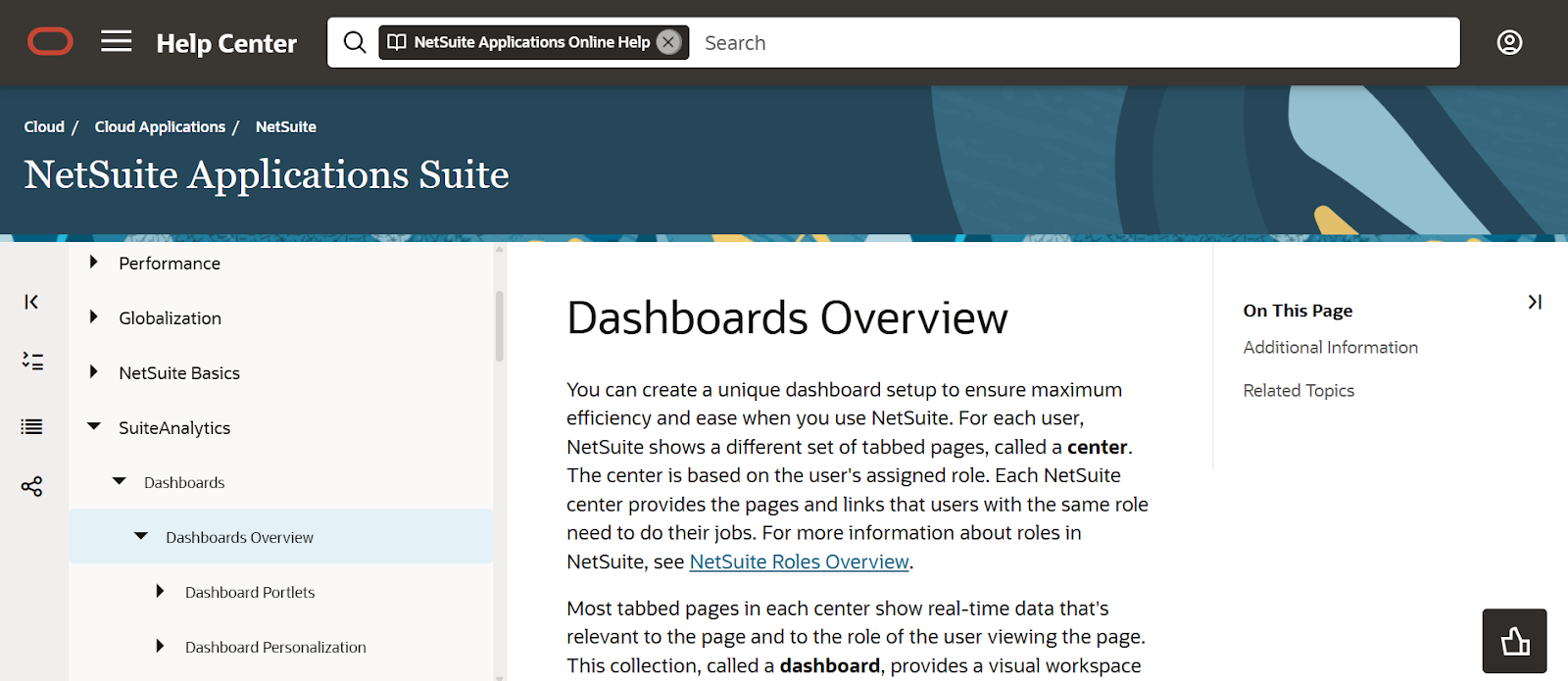
NetSuite is enterprise-grade. Powerful but complex. APIs include SOAP (SuiteTalk), REST, and SuiteScript. Each tenant may have heavy customizations, so schemas differ dramatically. Expect longer development cycles.
Documentation: https://docs.oracle.com/en/cloud/saas/netsuite
Key features
- Authentication: Token-based authentication with secure roles
- Architecture: SOAP, REST, and SuiteScript options
- Data access: Full ERP, GL, AR/AP, assets
- Sync style: Saved searches and scripted exports
- Customization: Highly tenant-specific schemas
- Environments: Sandbox and production separation
Best suited for: Mid-market and enterprise SaaS
Xero
Xero is one of the most developer-friendly APIs. Modern REST, strong webhooks, clean documentation, and broad European adoption. Many SaaS teams launch Xero first because integration time is short.
Docsumentation: https://developer.xero.com
Key features
- Authentication: OAuth 2.0 multi-organization access
- Architecture: RESTful JSON endpoints
- Data access: Contacts, invoices, journals
- Sync style: Webhooks with incremental queries
- Dimensions: Tracking categories for cost centers
- Documentation: Clear guides and examples
Best suited for: SME fintech apps
QuickBooks
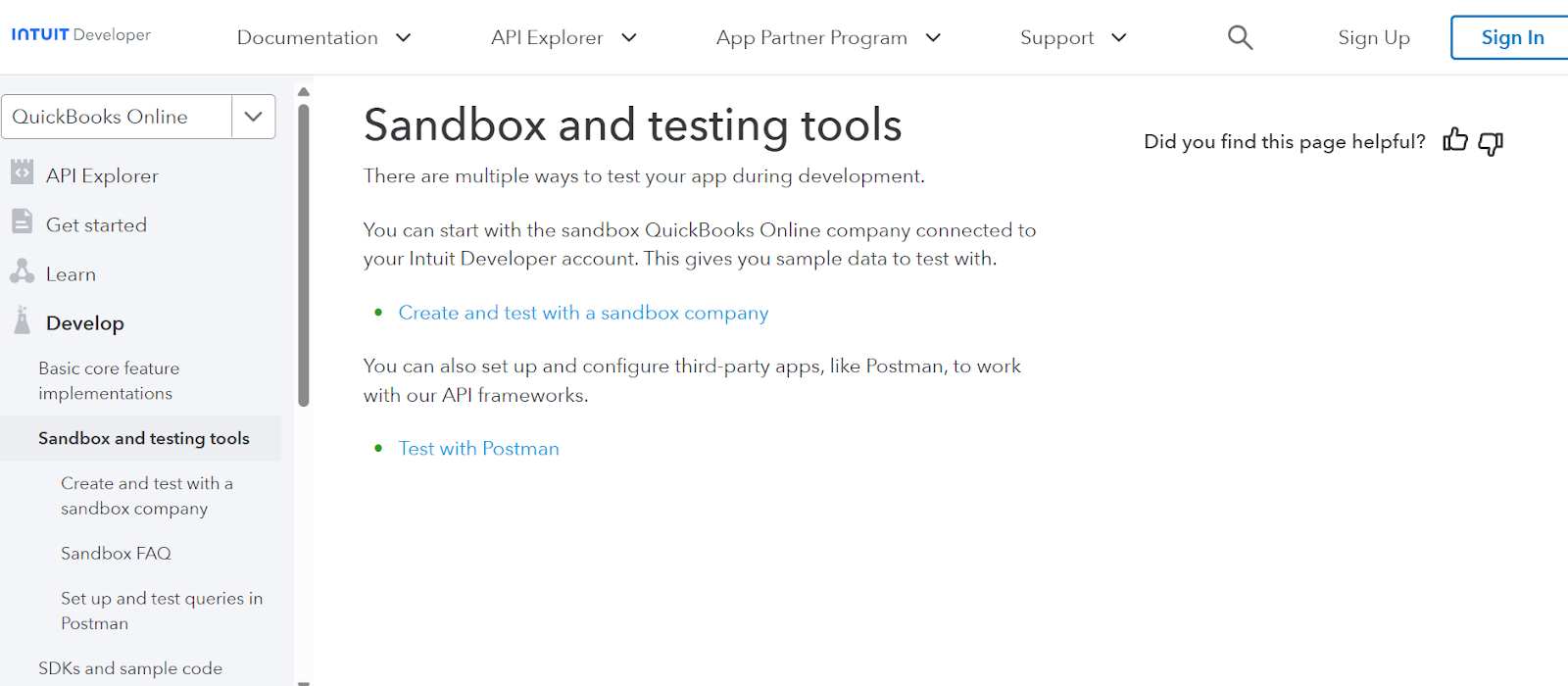
QuickBooks Online remains globally dominant and strong across the UK/Ireland. Its REST API, sandboxes, and SQL-like query language make bulk sync straightforward. Most invoice, card, and payroll tools depend on it.
Documentation: https://developer.intuit.com/app/developer/qbo/docs/develop
Key features
- Authentication: OAuth 2.0 with sandbox environments
- Architecture: RESTful JSON services
- Data access: Customers, vendors, invoices, payments
- Sync style: Webhooks combined with batch reconciliation
- Querying: SQL-like queries for filtered retrieval
- Compliance: Local VAT and multi-currency support
Best suited for: Universal SME finance applications
Sage Génération Experts
Designed for French accounting firms, Sage GE runs mostly on-prem with marketplace connectors. Integration often involves secure tunnels and OData-filtered queries. It’s critical for accountant-centric workflows.
Documentation: https://developer.sage.com
Key features
- Authentication: Marketplace-issued tokens for partners
- Architecture: On-prem connector-based integrations
- Data access: Multi-client ledgers and tax data
- Sync style: OData filtering for controlled transfers
- Compliance: French FEC audit exports supported
- Connectivity: Often requires secure tunnels or VPNs
Best suited for: Accountant-centric French tools
AFAS
AFAS uses GetConnectoren and UpdateConnectoren rather than classic APIs. You configure what data is exposed per tenant. Powerful but inconsistent across customers, which increases maintenance.
Documentation: https://aps.autodesk.com/developer/documentation
Key features
- Authentication: Token-based environment credentials
- Architecture: GetConnector and UpdateConnector model
- Data access: Accounting, payroll, HR modules
- Sync style: Structured read/write connectors
- Customization: Per-tenant schema definitions
- Limits: Strict API call quotas enforced
Best suited for: Benelux ERP stacks
Holded
Holded is becoming the “Xero of Spain.” It’s modern, API-first, and widely adopted by startups and digital-first SMEs. Much easier to integrate than traditional Iberian ERPs.
Documentation: https://developers.holded.com/reference/documents
Key Features
- Authentication: API tokens and OAuth access
- Architecture: REST-first clean JSON APIs
- Data access: Invoicing, CRM, inventory, accounting
- Sync style: Real-time event-driven integrations
- Adoption: Strong startup and ecommerce ecosystem
- Ease: Much simpler than legacy Iberian ERPs
Best suited for: Spanish SaaS, ecommerce, startup tools
Put It All Together with a Unified API
Across all the accounting APIs, you see an obvious pattern- different auth, formats, rate limits, tax rules and deployment models. Maintaining a dozen direct integrations quickly becomes an engineering and compliance burden.
Chift’s Unified Accounting API solves this by normalizing data models, auth flows and sync patterns across European accounting tools, so your team ships one integration instead of twelve. You still get deep, localized coverage- DATEV jobs, AFAS GetConnectors, Sage GE marketplace connectors, modern REST for Pennylane/Xero/QuickBooks, and more, but through a single, well-documented API and connector catalogue.
Related: How a Unified Accounting API can boost your growth
For any fintech, SaaS or payments platform planning to scale across Europe in 2026, the most efficient route is to integrate once with Chift’s Unified Accounting API, and let Chift handle the fragmented accounting landscape underneath. Connect with us to know more.
FAQs
1. Why do fintech and SaaS products need multiple accounting integrations in Europe?
Europe’s accounting ecosystem is highly fragmented. Each country uses different tools, tax standards, and APIs. Supporting only one platform limits market reach, while multiple integrations ensure broader customer adoption and smoother onboarding.
2. Should teams build accounting integrations in-house or use a unified API platform?
Building in-house gives control but demands continuous maintenance, updates, and compliance handling. A unified API platform reduces engineering overhead, accelerates go-live timelines, and standardizes integrations across multiple accounting systems efficiently.
3. What technical challenges are common when integrating accounting APIs?
Common technical challenges typically include:
- Different authentication methods
- Inconsistent data models
- API rate limits
- Batch vs real-time sync
- Country-specific tax rules
- Complex error handling
4. How does Chift reduce the complexity of European accounting integrations?
Chift abstracts multiple accounting platforms behind one unified API. Instead of managing different auth flows, schemas, and sync rules, your team works with a single, consistent integration layer.
.webp)