For many accountants, time is what limits the number of clients that they can serve. Yet a large part of said time is still spent on tasks that bring little added value: collecting data from multiple tools, checking figures, and manually encoding transactions. As small and medium-sized businesses (SMBs) multiply their financial software stack, this workload only increases.
Accounting integrations are changing that reality. By allowing accounting tools to communicate directly with business systems such as POS or PMS, integrations drastically reduce manual data entry. For accountants, this is not just a technical improvement. It is a concrete way to reclaim time, improve accuracy, and focus on advisory work.
The daily reality of accountants: too many tools, too much manual work
Today, an SMB rarely relies on a single system. In fact our own accountingtech market research shows that most companies use multiple financial software: POS, PMS, CRM, ERP, Banking, Payment, Spend... When these systems don’t communicate, accountants become the human bridge between them.
Anthony Vallée, Chartered accountant in training who uses Chift’s Mews connector for Pennylane, describes this situation clearly:
“Without integrations, a lot of our time is spent collecting data from different tools, checking consistency, and re-encoding information that already exists somewhere else.”
This fragmentation leads to repetitive tasks, delays in closing accounts, and a higher risk of errors. Especially when sales volumes are high.
Why POS integrations matter so much for accountants
Among all business tools, POS systems are particularly critical. A POS is the central source of truth for daily sales in sectors like retail, hospitality, and food services. Every day, POS systems generate Z reports that summarize transactions, VAT, and payment methods.
Manually encoding these Z reports into accounting software is time-consuming and error-prone. A single missing line or incorrect VAT rate can create discrepancies that take even more time to resolve later.
With a proper POS-to-accounting integration, Z reports are automatically transmitted and transformed into accounting entries. For accountants, the benefits are immediate:
- No more daily or weekly manual encoding
- Fewer inconsistencies between sales and accounting
- Faster month-end and year-end closings
As Anthony Vallée explains:
“When sales data flows automatically from the POS into the accounting tool, we can trust the numbers much more and spend our time reviewing instead of retyping.”
Up to 70% time saved on encoding
The impact of automation is not marginal. Software vendors offering accounting integrations regularly report massive time savings for their users.
For example, accountants using Axonaut have reported saving up to 70% of their encoding time thanks to automated data synchronization. That is several hours per week freed for each accountant, especially for clients with high transaction volumes.
This time can be reinvested where it truly matters:
- Advising clients on cash flow and profitability
- Anticipating tax and VAT issues
- Supporting business decisions with real-time data
Accuracy, compliance, and peace of mind
Beyond time savings, integrations also improve data quality. Automated flows reduce manual manipulation, which means fewer errors and more consistent records.
This is becoming even more important as regulatory requirements evolve. With the rise of e-invoicing and e-reporting across Europe, accounting data must be more structured, more timely, and more reliable than ever.
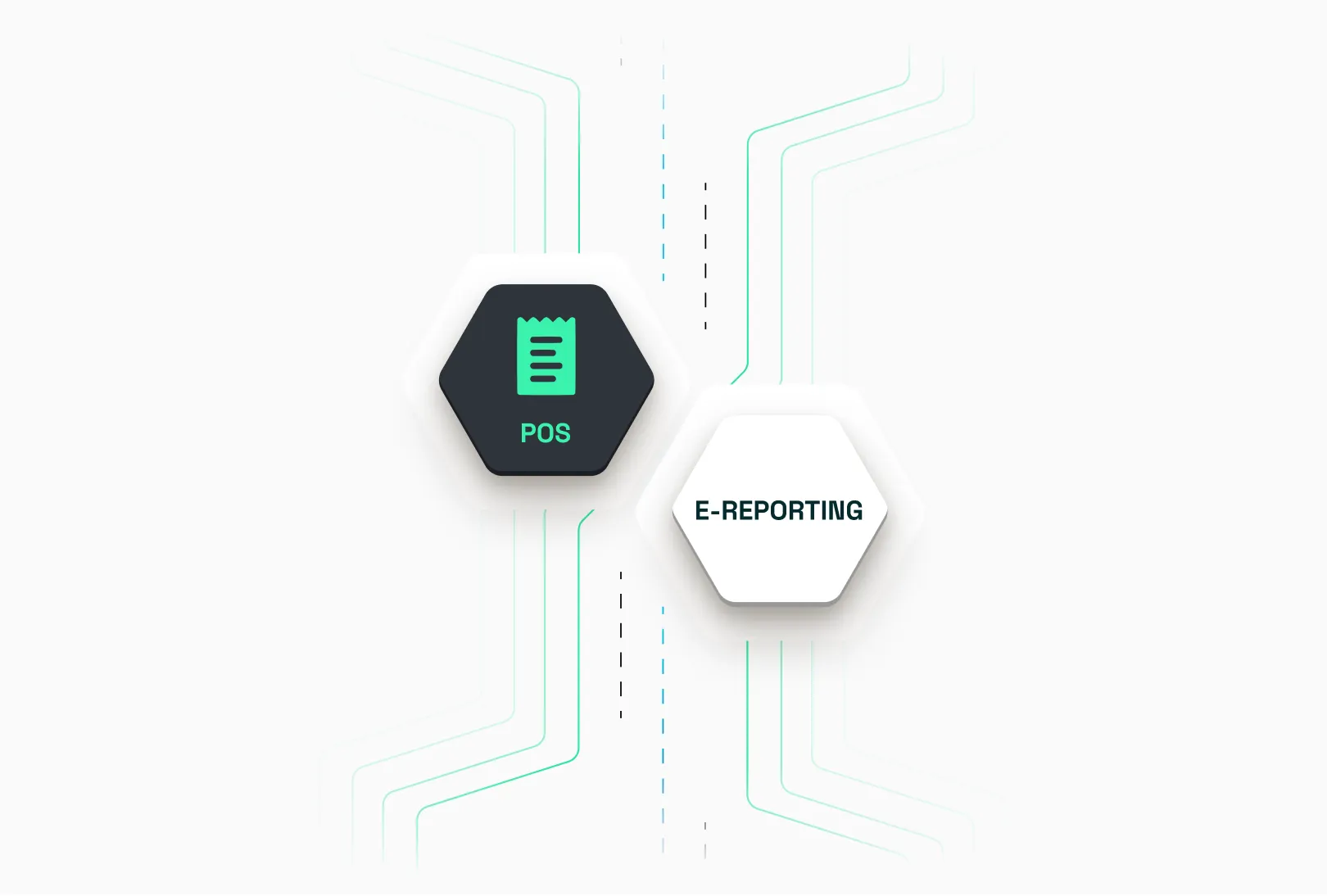
POS systems will play a central role in this transition, making it essential for them to communicate seamlessly with accounting tools. You can explore this topic in more detail in our article on why e-reporting matters for POS systems.
From data entry to advisory: a shift in the accountant’s role
Accounting integrations are not just about saving time. They enable a deeper transformation of the profession. When data flows automatically, accountants can move away from repetitive tasks and focus on higher-value services.
As Anthony Vallée sums it up:
“Integrations allow us to do what clients actually expect from us: understand their business and help them make better decisions.”
In a context where expectations are rising and compliance is becoming more complex, integrations are no longer a “nice to have.” They are quickly becoming a foundation of modern accounting practices.
Want to see how accounting integrations work in practice?
Book a demo to explore your integration use case and understand how automated data flows can transform your user’s daily work.
Watch the full interview


.jpg)
.jpg)
.jpg)
.jpg)
.jpg)
.jpg)
.jpg)
.jpg)
.webp)
.webp)
.webp)




.webp)


.avif)


